
Data Scientist &
ML Engineer

A Broadminded Data Scientist & Machine Learning Engineer with proficiency working with Python and its ecosystem, R, SQL, and other data tools for data analysis, forecasting, predicting, and visualizing. Experienced in developing and deploying cutting-edge machine learning models and algorithms to drive business growth and optimise decision-making processes.
My Services
My Recent Works

CAR PRICE PREDICTION
Project was about predicting car prices using ML.

YORUBA PROVERB GENERATOR
Project was about using NLP to generate Yoruba proverbs.

Spotting facial expressions
Project was about facial expression and computer vision.
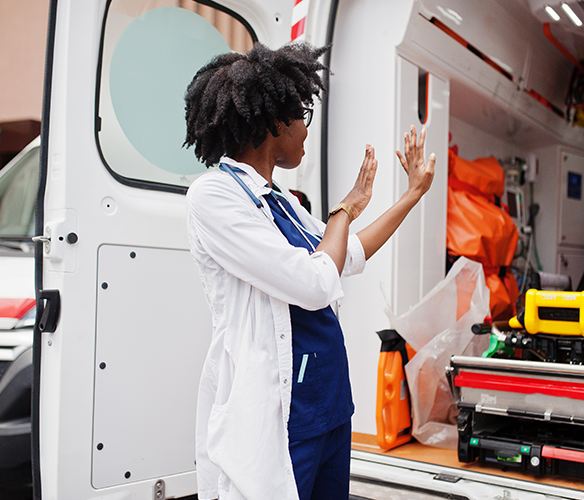
Accident and Emergency Analysis
Project was about data visualization and reporting.
Project Description
The goal of this project is to develop a machine learning-based web application that accurately predicts car prices based on various features of car listings. By leveraging a dataset containing detailed attributes of cars, the project aims to provide users with an estimated car price when they input specific details about a vehicle. The application utilizes a regression model to perform these predictions and incorporates several user-friendly features to enhance the overall experience.
OUR APPROACH
In this project, we successfully trained a machine learning model to estimate car prices using a dataset of car listings with features such as make, model, year, mileage, and more. We developed an interactive web application that allows users to input car details and receive an estimated price, ensuring a user-friendly experience with dynamic updates to dropdown menus based on user selections. Our approach included robust data preprocessing to convert categorical variables into a numerical format suitable for the machine learning model, significantly enhancing its accuracy and performance. We provided straightforward instructions for installing dependencies and launching the web application, making it easily accessible to users with varying levels of technical expertise. Additionally, we incorporated engineering techniques to dynamically update the car details section based on user input, ensuring a seamless and intuitive user experience.
Project Description
The goal of this project is to develop a Yoruba proverb generator application that utilizes machine learning techniques to generate meaningful proverbs from input keywords or phrases in the Yoruba language. The application aims to provide users with an interactive platform where they can input Yoruba words or phrases, select the number of additional words they want the model to generate, and receive a corresponding Yoruba proverb.
OUR APPROACH
In this project, we developed a Yoruba proverb generator application that takes in a keyword or phrase in Yoruba and generates a corresponding proverb. Utilizing the Keras tokenizer for token generation and a Sequential model with an embedding layer and two LSTM layers, we ensured the model could handle homonyms and language intonations, thereby producing coherent and meaningful proverbs. Additionally, we integrated the Google Translator API via the deep-translator library to provide English translations of the generated Yoruba proverbs, making them accessible to non-Yoruba readers. This application offers a user-friendly interface where users can input Yoruba keywords or phrases and select the number of additional words they want the model to generate, with the generated proverbs dynamically updated and translated for ease of understanding.To facilitate the correct input of Yoruba characters, users can utilize tools such as the Lexilogos multilingual keyboard, accessible via a provided link, or the touch keyboard on Windows and Mac OS. For mobile devices, adding Yoruba as a language preference in the keyboard settings enables users to type in Yoruba. This comprehensive approach ensures that users can easily generate and understand Yoruba proverbs through the application.
Project Description
The recognition of facial expressions is fundamental for effective social communication. However, the accurate identification of facial expressions in video sequences remains a challenging and unsolved problem. This project seeks to address these gaps by investigating and comparing the efficacy of traditional feature extraction and deep learning methods in facial expression recognition, with a specific focus on implementing MediaPipe for facial landmarks detection, dataset augmentation, and understanding the nuanced interactions between model architectures.
OUR APPROACH
Our approach encompasses the extraction of pertinent facial features from facial regions utilizing a combination of traditional feature extraction methods and Convolutional Neural Network (CNN) algorithms. Furthermore, the research scrutinizes the efficacy of the MediaPipe library in accurately detecting facial landmarks within facial images. Leveraging both traditional feature extraction methods and deep learning approaches, the research endeavors to ascertain the optimal approach for feature extraction and classification. The preprocessing phase involves the amalgamation of datasets and groundtruth annotation, laying the groundwork for subsequent analysis. The utilization of techniques such as Local Binary Patterns (LBP) and Support Vector Machine (SVM) for feature extraction and classification, along with CNN coupled with data augmentation methods like Random Horizontal Flip, Random Rotation, and Gaussian Blur, further enhances the model's accuracy and robustness in detecting and classifying facial expressions. Moreover, the integration of MediaPipe for facial landmark detection adds another dimension to the model's capabilities, enriching its potential applications in various real-world scenarios. Additionally, the model will be deployed using Gradio, facilitating its widespread implementation across diverse domains such as affective computing, human-computer interaction, surveillance systems, and behavioral analysis.
Project Description
The primary goal of this project is to demonstrate proficiency in utilizing Python, PostgreSQL, PowerBI, and PowerPoint for various data-related tasks, including data cleaning, migration, visualization, and reporting.
OUR APPROACH
The project utilizes a dummy dataset representing cases attended to in the Accident and Emergency department over a two-year period from a specific NHS Trust. Through the implementation of scripts such as csv_to_sql.py and discharge_to_home_sql.py, the project aims to efficiently transfer the dataset into a PostgreSQL database, enabling effective data storage and management. The data_cleaning.ipynb notebook further ensures data integrity and quality through initial data cleaning processes. Additionally, the project incorporates the creation of a PowerPoint presentation (NHS NECSU.pptx) containing a live PowerBI dashboard, providing dynamic visualization and insights into important metrics and trends within the dataset. The accompanying NHS NECSU.pdf offers a static version of the PowerBI dashboard for reference and distribution. Overall, the project aims to showcase skills in data handling, visualization, and reporting, particularly within the healthcare domain, while leveraging a diverse set of tools and technologies.
My Experience
My Education
My Skills

Python

SQL

Pytorch

Scikit-Learn

Power BI

GIT
Let’s work together!
-
Phone
+447769986618 -
Email
kingsleyadebo@gmail.com -
Address
England, United Kingdom